
Beyond the Greenback: The Structural Shift Toward a Multipolar Financial Order

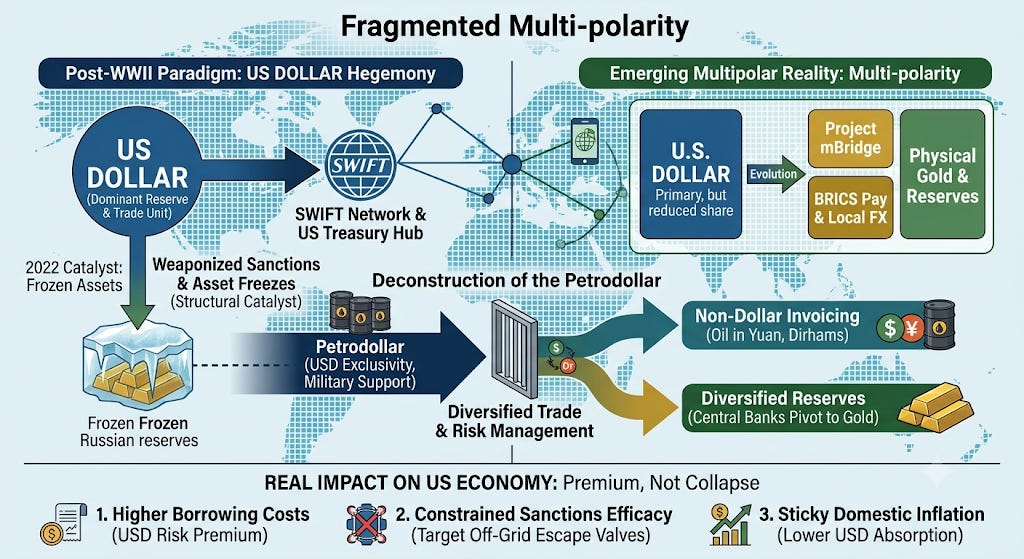
For nearly eight decades, the United States dollar has stood as the undisputed bedrock of global commerce. From crude oil trades in the Persian Gulf to electronic component shipments across Asia, the greenback has provided a universal medium of exchange and a safe haven for central bank reserves.
In recent years, however, a dramatic narrative has taken hold in public commentary and geopolitical discourse: that the US dollar is on the brink of an imminent, cataclysmic collapse. Driven by high-profile announcements from the expanded BRICS bloc, the rise of central bank digital currencies (CBDCs), and the diversification of energy trade, critics argue that Washington’s financial hegemony is facing its final days.
Yet, a forensic examination of global financial data reveals a more nuanced reality. While claims of an overnight “dollar demolition” overestimate the currency’s short-term vulnerability, a structural rewiring of the international monetary system is indeed underway. Rather than replacing the dollar with a single alternative, the world is moving toward fragmented multi-polarity—a system where non-Western nations build parallel financial plumbing to hedge against Washington’s economic leverage.
1. Weaponized Sanctions as a Structural Catalyst
To understand why alternative payment systems are gaining momentum, one must look at how weaponized foreign policy altered the risk calculus for sovereign governments.
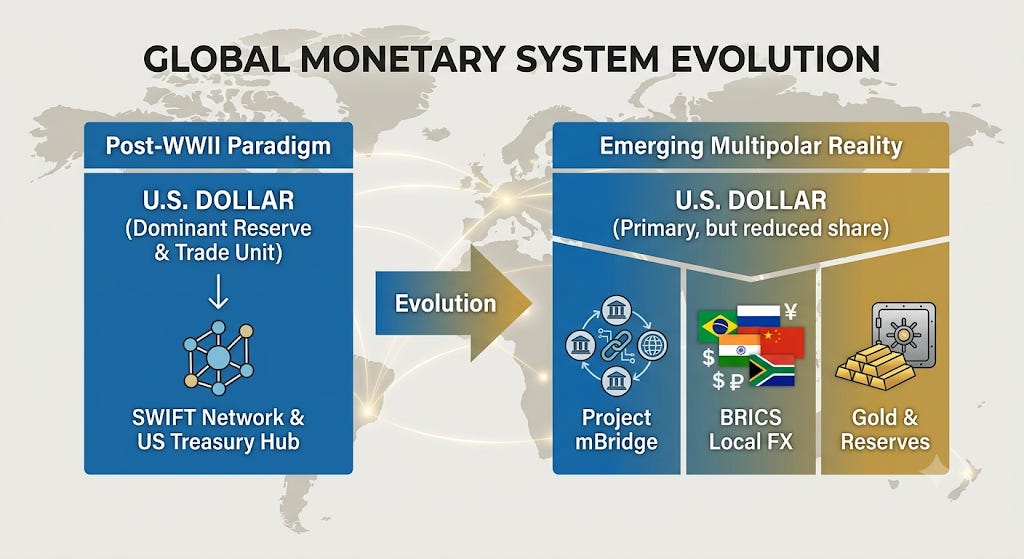
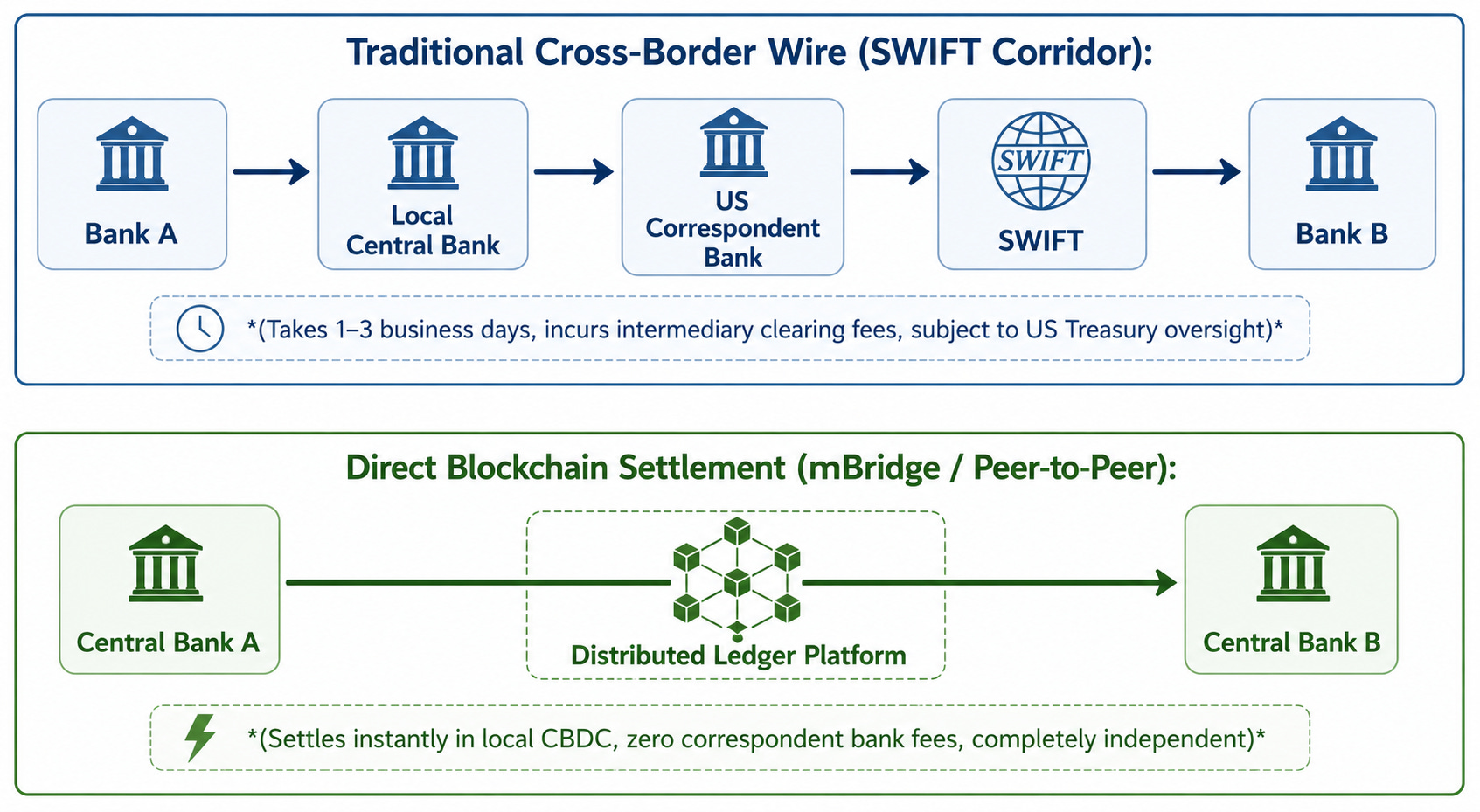
Historically, the US dollar’s role as the primary global reserve currency granted Washington immense geopolitical power. Financial sanctions—most notably executed through the SWIFT interbank messaging system and dollar-clearing operations managed by New York financial institutions—allowed the United States to isolate adversaries without deploying military force.
The decisive turning point occurred in 2022, following Russia’s invasion of Ukraine, when Western nations froze roughly $300 billion in Russian foreign exchange reserves.
For policymakers across the Global South, including nations not party to the conflict, this event marked a fundamental paradigm shift:
Sovereign Liability: Holding assets denominated in dollars or stored within Western jurisdiction ceased to be viewed purely as a neutral financial strategy; it became recognized as a potential political liability.
Risk Mitigation: Developing alternative payment channels moved from a speculative concept to a matter of national security and economic sovereignty.
When leverage turns into a perceived existential threat, sovereign actors inevitably seek insurance. The drive toward de-dollarization is less about ideological hostility and more about cold forensic risk management.
2. The New Plumbing: Project mBridge and BRICS Messaging Networks
The most significant developments in this shifting landscape are not rhetoric, but changes in underlying infrastructure.
Project mBridge
Developed in collaboration with the Bank for International Settlements (BIS) Innovation Hub alongside the central banks of China, Thailand, the United Arab Emirates, Hong Kong, and later Saudi Arabia, Project mBridge represents a technical milestone in cross-border payments.
Built on a customized distributed ledger technology (DLT), mBridge allows participating central banks to execute peer-to-peer, real-time cross-border settlements using their own multi-central bank digital currencies (mCBDCs).
The BRICS Alternative Platform
Alongside mBridge, the BRICS coalition has advanced its own Cross-Border Payments Initiative and decentralized messaging proposals (often discussed as DCMS or BRICS Pay). These tools aim to directly interconnect domestic payment systems—such as India’s UPI, Brazil’s Pix, and China’s digital yuan—without routing instructions through Western financial hubs.
Critical Assessment: Architectural Innovation vs. Practical Limits
While these digital platforms successfully remove correspondent banks and eliminate transaction visibility for the US Treasury, significant hurdles remain before they can challenge global dollar operations:
Governance & Trust: Multi-lateral digital currency ledgers require extraordinary policy alignment among participating central banks regarding monetary policy, exchange rate controls, and liquidity provision.
Capital Account Restrictions: A payment messaging system is not the same as a deep capital market. China’s digital yuan can facilitate instant bilateral trade settlements, but strict capital controls limit its utility as a global store of value.
Network Effects: SWIFT connects over 11,000 financial institutions globally. An alternative ledger connecting a dozen central banks provides a targeted, off-grid escape valve for specific trade routes, but it does not yet provide full global liquidity.
3. Deconstructing the “Petrodollar Collapse”
A central pillar of the de-dollarization argument is the alleged “death of the petrodollar”—the informal arrangement dating back to the mid-1970s whereby Saudi Arabia and other Gulf oil producers priced crude oil exclusively in US dollars in exchange for American security guarantees.
What Has Changed
It is indisputable that the strict exclusivity of the petrodollar has weakened:
Diversified Trade: Saudi Arabia and the UAE have expressed openness to settling energy sales in non-dollar currencies, particularly with their largest buyer, China.
Direct Non-Dollar Transactions: Gulf energy producers now participate in platforms like mBridge, settling transactions directly in dirhams or yuan.
The Structural Counterweight
However, proclaiming the total end of the petrodollar misses how sovereign wealth and currency pegs actually function:
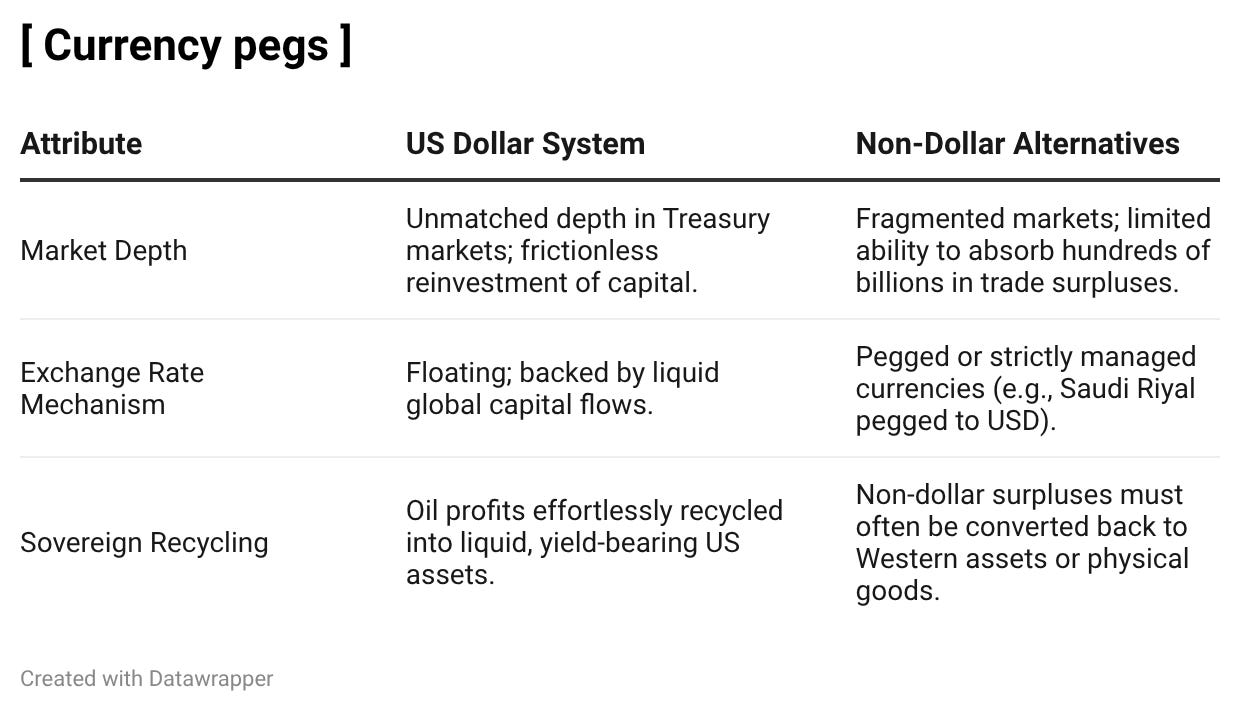
Because Gulf currencies remain pegged to the US dollar, accumulating vast quantities of non-convertible foreign currencies poses monetary management challenges for their central banks. Consequently, while trade invoicing is diversifying, trade surpluses still overwhelmingly flow back into dollar-denominated assets.
4. The Real Impact on the US Economy: Premium, Not Collapse
If the dollar is not going to vanish overnight, what are the true consequences of this shifting financial architecture for the United States?
The impact is best understood not as a sudden collapse, but as a gradual erosion of Washington’s “exorbitant privilege”—the unique ability to issue debt cheaply because the rest of the world is forced to hold dollars for trade.
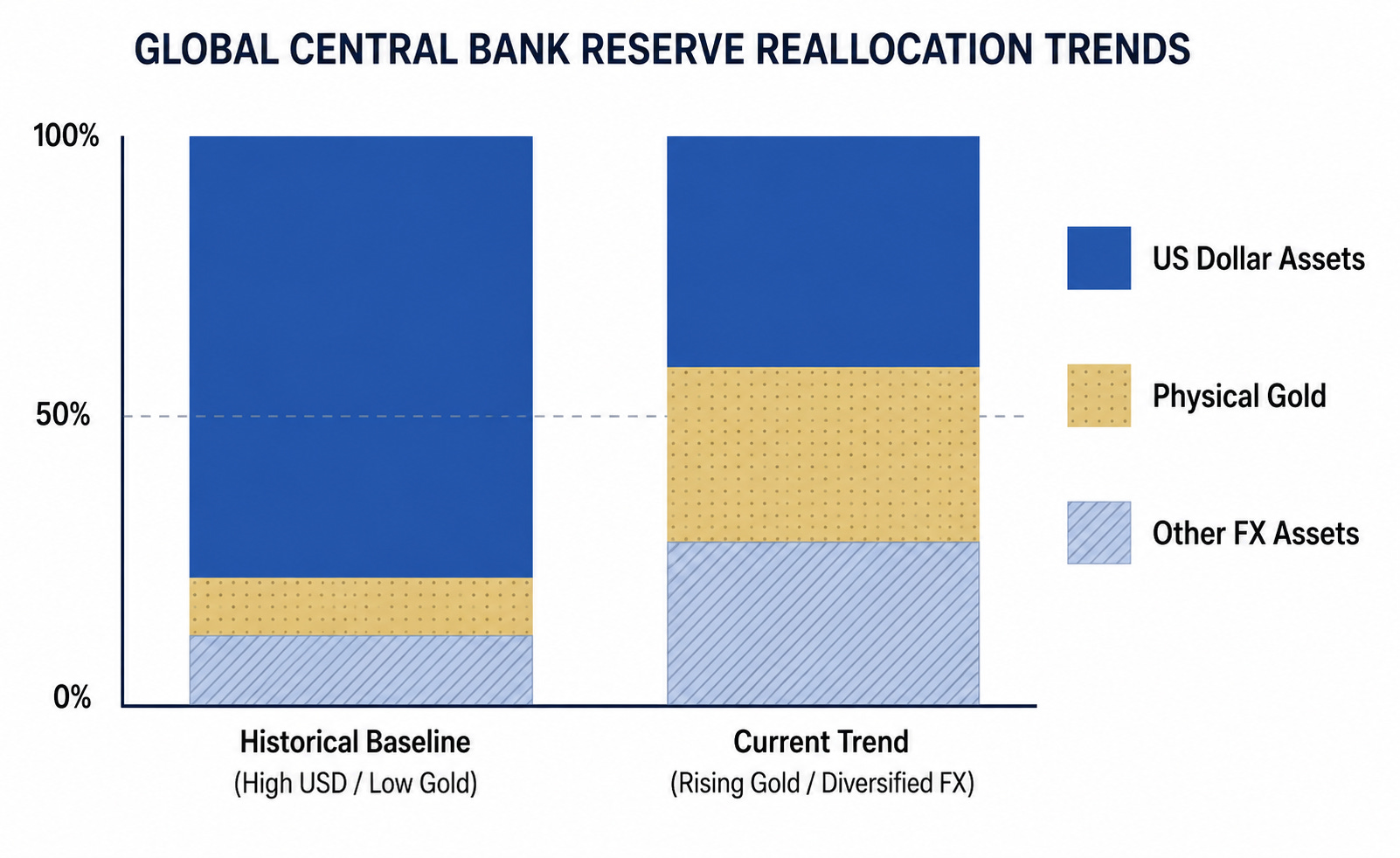
Central Banks Pivot to Gold
As central banks in the Global South seek neutral reserve assets that carry no counterparty risk, foreign official holdings of US Treasuries have plateaued, while central bank gold accumulation has reached historic levels. According to International Monetary Fund (IMF) and European Central Bank (ECB) data, gold’s share of global official reserves has climbed significantly, surpassing Treasury holdings in select regional central bank portfolios.
Economic Consequences for Washington
Higher Borrowing Costs: As foreign central banks reduce their structural appetite for US Treasuries, the US government must offer higher yields to attract domestic and international investors. This imposes a permanent risk premium on US federal debt.
Constrained Sanctions Efficacy: As alternative rails like mBridge scale, the punitive impact of future US sanctions will decline. Target nations will increasingly operate within alternative economic spheres beyond Washington’s reach.
Sticky Domestic Inflation: A lower global demand to absorb excess dollars exported via trade deficits means inflationary pressures are more likely to remain domestic, impacting consumer mortgage rates and capital costs over the long term.
Conclusion: The Era of Monetary Multi-Polarity
The sensationalized view that the US dollar will experience a total crash misinterprets the inertia of global finance. The dollar remains unequaled in institutional trust, legal transparency, market depth, and capital liquidity. No single rival currency—neither the yuan, the ruble, nor a hypothetical BRICS token—possesses the structural traits necessary to replace it as a global reserve standard.
However, dismissing the structural changes under way is equally shortsighted. The strategic overreach of financial sanctions has incentivized major economies to build a dual-track monetary system.
We are entering an era of monetary multi-polarity: a world where the dollar remains the primary currency for global commerce, but operates alongside insulated, regional, digital networks designed specifically to bypass American financial oversight. Washington will retain its monetary power, but the cost of maintaining that power—and the consequences of overusing it—have permanently changed.
Major References & Scientific Literature
Bank for International Settlements (BIS). (2024). Project mBridge: Connecting central banks through a multi-CBDC platform. BIS Innovation Hub Report.
International Monetary Fund (IMF). (2025). Currency Composition of Official Foreign Exchange Reserves (COFER). IMF Statistics Department.
European Central Bank (ECB). (2026). The International Role of the Euro and Foreign Reserve Allocation Trends. ECB Special Report Series.
Eichengreen, B. (2011). Exorbitant Privilege: The Rise and Fall of the Dollar and the Future of the International Monetary System. Oxford University Press.
Farhi, E., & Maggiori, M. (2018). A Model of the International Monetary System. The Quarterly Journal of Economics, 133(1), 295–355.
Prasad, E. S. (2021). The Future of Money: How the Digital Revolution is Transforming Currencies and Finance. Harvard University Press.